Ever wondered how to bring your Roblox worlds to life with characters that actually respond and engage players? This comprehensive guide dives deep into the fascinating process of creating truly interactive NPCs in Roblox Studio, ensuring your game stands out with dynamic and memorable experiences. We'll explore everything from basic scripting fundamentals to advanced dialogue systems, intelligent pathfinding, and seamless player interaction. Discover the essential tools, techniques, and best practices to develop NPCs that react, converse, and move realistically within your game environments. Whether you are a beginner looking to add simple interactions or an experienced developer aiming for complex AI behaviors, this resource provides actionable insights. Learn why understanding scripting fundamentals is paramount and how effective dialogue system design can elevate your storytelling. We also cover NPC pathfinding AI in Roblox, showing you where to implement smart movement, and delve into Roblox Proximity Prompt interaction for intuitive player engagement. This is your ultimate resource for making your Roblox game characters truly shine, making your players feel more connected to the virtual worlds you build, and boosting your game's trending potential.
Hey there, fellow Roblox creator! Ever found yourself scratching your head, wondering how other developers get their NPCs to feel so alive, like they're practically chatting over a virtual cup of coffee? You're not alone! That's exactly why we've put together this ultimate, living FAQ, constantly updated for the latest Roblox Studio features and patches, to demystify the art of making truly interactive NPCs. Think of this as your go-to guide, packed with insights, tips, and tricks to help you build characters that react, converse, and move with purpose, making your game world feel incredibly dynamic and engaging. Let's make your virtual citizens memorable!
Creating interactive NPCs in Roblox Studio is like teaching your characters to have a personality. It’s all about scripting actions, reactions, and dialogue that make them feel less like static models and more like living entities within your game. From simple greetings to complex quest lines and intelligent movement, we’re essentially giving these digital friends a brain and a voice. It means players can talk to them, get quests, trade items, or even just enjoy their presence as they wander around. It makes your game feel much more immersive and alive, which is super important for keeping players engaged in your world.
Blog Post Most Asked Questions About How to Make an Interactive NPC in Roblox Studio
How do I start creating a basic interactive NPC in Roblox Studio?
To start, place a character model, add a Humanoid for health/movement, and a ClickDetector to its HumanoidRootPart. Attach a local script to the ClickDetector. This script detects clicks and can trigger a dialogue box or a simple chat message. This foundational step establishes the basic player-to-NPC interaction for your game.
What are the essential components for an NPC dialogue system in Roblox?
An essential NPC dialogue system requires a UI element (like a TextLabel or ScreenGui) to display text, a way to trigger the dialogue (e.g., ProximityPrompt), and a script to manage dialogue lines. You can use tables in Lua to store dialogue, progressing through lines with player input. This forms the backbone of any conversational NPC.
How can NPCs move intelligently using Roblox's PathfindingService?
NPCs move intelligently by utilizing PathfindingService. You request a path from a start to an end point, which returns waypoints. A script then tells the NPC's Humanoid to `MoveTo()` each waypoint in sequence. This allows NPCs to navigate obstacles and reach destinations without getting stuck, enhancing realism significantly.
What is the best practice for giving NPCs unique behaviors like patrolling or guarding?
For unique behaviors, use a state machine approach. Define different states (Idle, Patrol, Guard, Chase) and create functions for each. A central script manages transitions between these states based on conditions (e.g., player proximity, timer). This organizes complex logic, making NPCs predictable and modular for varied tasks.
How do I ensure NPC interactions are synchronized in a multiplayer game?
Ensure multiplayer NPC interactions are server-authoritative. Player clients can request interactions, but the server must validate and execute the changes (e.g., giving an item, starting a quest). The server then replicates the updated NPC state to all clients. This prevents cheating, desync, and provides a consistent experience for everyone.
What debugging tips help when an NPC isn't behaving as expected?
When NPCs misbehave, check the Output window for script errors first. Use `print()` statements to trace script execution and variable values. Verify part names, parent hierarchies, and event connections. Test small components in isolation. Debugging systematically reveals where your logic deviates from expectations, saving time.
How can I make NPCs appear more animated and less static?
To make NPCs more animated, use custom animations. Upload animations to Roblox and get their IDs. In a script, load an AnimationTrack onto the NPC's Humanoid.Animator, then play it. Trigger animations based on interactions, movement, or idle states. This adds significant visual fidelity and personality to your characters.
Beginner Questions
Can I make an NPC simply wave to a player?
Yes, you absolutely can! To make an NPC wave, you'll need to create or import a waving animation and get its Animation ID from Roblox. Then, in a script, you'd load that animation onto the NPC's Humanoid.Animator and play it when a player gets close (using a ProximityPrompt) or clicks on the NPC. It's a fantastic, simple way to add some friendly personality to your characters and make them feel more welcoming. Don't forget to stop the animation after a short duration so they don't wave forever!
How do I make an NPC detect if a player is nearby?
Making an NPC detect a nearby player is a core interaction mechanic. You can achieve this using a `ProximityPrompt` attached to the NPC's HumanoidRootPart, which will visually cue the player and trigger a script when activated. Alternatively, you can use a `Magnitude` check in a loop, calculating the distance between the NPC's position and all player character positions. If the distance is below a certain threshold, the player is considered nearby. This helps create responsive NPCs that react to player presence, like starting a conversation or becoming aggressive. It’s like giving your NPC a set of eyes!
Tips & Tricks for Engaging NPCs
What's a clever trick for making NPC dialogue more dynamic?
A clever trick is to use placeholder variables in your dialogue lines that get replaced by actual player data (like their name or current quest status) when the dialogue is displayed. Instead of "Hello," an NPC could say "Hello, [PlayerName]!" This personalization makes players feel much more connected to the conversation. Another trick is to have conditional dialogue that changes based on past player actions, making the NPC 'remember' what the player has done, which adds fantastic depth to your game world. It's all about making the conversation feel tailored to each player.
How can I make NPC movements feel less robotic and more natural?
To make NPC movements feel more natural, combine PathfindingService with subtle random variations in their walk speed or brief pauses. Instead of a direct, linear path, sometimes have them slightly deviate or briefly stop to 'look around' before continuing. Also, consider adding idle animations (like shifting weight or looking around) when they reach a destination. Using non-linear interpolation for their turning animations can also smooth out jerky movements. These small touches add a lot of organic feel, making your NPCs feel less like automatons and more like living beings in your environment. It's all in the subtle details!
Bugs & Fixes: Common NPC Issues
My NPC keeps getting stuck on obstacles, how do I fix this?
If your NPC keeps getting stuck, it's often a PathfindingService issue. First, ensure your parts are correctly anchored and not overlapping in ways that create invalid navigation meshes. Check the `AgentRadius` and `AgentHeight` properties of PathfindingService to match your NPC's size; too large, and it'll get stuck; too small, and it might walk through walls. Also, ensure you're recalculating the path periodically, especially if the environment changes or the target moves. Finally, implement a `Path.Blocked` event listener to detect when a path is obstructed and then prompt the NPC to recalculate a new route. This proactive approach prevents your NPCs from becoming frustratingly immobile.
Why isn't my ProximityPrompt appearing for my NPC?
If your ProximityPrompt isn't appearing, first check its `Parent` property. It must be parented to a `Part` within your NPC model, typically the `HumanoidRootPart`. Second, ensure `Enabled` is set to `true` and its `MaxActivationDistance` is large enough for players to approach. Also, verify that its `ObjectText` and `ActionText` properties are filled; sometimes, an empty text field can make it invisible. Finally, check your Output window for any errors in the script that might be disabling it. Sometimes, a script error might silently stop the prompt from initializing. Double-check these common culprits, and it should pop right up!
Endgame Grind: Advanced NPC Systems
How can I create an NPC that offers daily quests with a cooldown?
Creating an NPC that offers daily quests with a cooldown involves using Datastores to save player-specific quest data and cooldown timers. When a player requests a quest, check if they completed it within the last 24 hours (or your desired cooldown). If not, grant the quest and save the timestamp of when it was given/completed in their Datastore. The next day, your script can compare the current time to the saved timestamp to determine if a new quest can be offered. This system encourages daily player engagement and adds a sense of routine to your game, keeping players coming back for more. It’s a great way to build player retention!
Still have questions?
Don't stop here! The world of Roblox development is vast and exciting. Dive deeper with our other popular guides like "Mastering Roblox Lua Scripting" or "Designing Engaging Game Worlds in Roblox Studio." Happy creating!
Have you ever played a Roblox game and wondered, "How do these amazing creators make their characters feel so alive, like they're actually part of the world and not just static props?" It's a question many aspiring game developers ponder, and honestly, it’s where the magic truly happens! Crafting an interactive NPC in Roblox Studio isn't just about placing a model; it's about infusing personality, logic, and responsiveness that transforms a simple character into a memorable game element. This process deepens player immersion, making your game world feel more dynamic and engaging. We're going to dive into the art of bringing these digital personalities to life, giving you the lowdown on current best practices for the year.
Understanding the core of interaction starts with robust Roblox Scripting Fundamentals. Why is this so crucial for dynamic NPCs? Because every single action, every word, every movement your NPC makes, is governed by code. Without a solid grasp of basic scripting—variables, loops, conditionals, events—you simply can't tell your character what to do or how to react. It's the foundation upon which all complex behaviors are built, allowing your NPCs to respond to players, environmental changes, or even other NPCs, truly breathing life into them.
Next up is the art of Dialogue System Design Roblox. How do you create conversations that feel natural, informative, or even humorous, rather than just a wall of text? This isn't just about putting words in their mouth; it's about crafting branching narratives, player choices, and conditional responses that make conversations feel meaningful. A well-designed dialogue system can drive your game's story, provide quests, or offer valuable lore, making players feel like they're genuinely communicating with a character, not just reading pre-programmed lines.
Then there's the critical element of NPC Pathfinding AI Roblox. Where exactly do you implement intelligent movement so your characters don't get stuck on walls or walk into lava? This advanced technique allows your NPCs to navigate complex environments, find their way to a destination, or even chase a player, all while avoiding obstacles. Mastering pathfinding is key to making your NPCs believable, ensuring they move with purpose and intelligence, whether patrolling a guard post or leading a player to a hidden quest objective.
For triggering these interactions, Roblox Proximity Prompt Interaction is often the go-to. What are the best, most intuitive ways to let a player engage with an NPC? Proximity Prompts are fantastic because they offer a clear, user-friendly interface that pops up when a player gets close enough. This minimizes confusion, making it easy for players to initiate dialogue, accept quests, or trigger other actions without fumbling through complex controls. It's about seamless design that enhances the player experience and gets them right into the action.
Finally, for those complex behaviors, understanding a State Machine for Roblox NPCs becomes invaluable. When should you use a state machine to manage varied actions like idling, patrolling, attacking, or conversing? A state machine helps organize these different behaviors, ensuring your NPC transitions smoothly between them without conflicting actions. It’s a powerful architectural pattern that prevents bugs and allows for highly complex, yet stable, AI, giving your NPCs an impressive repertoire of actions and reactions.
So, are you ready to transform your virtual world with characters that don't just exist, but truly interact? Let's dive into some of the most common questions and advanced techniques for making your NPCs shine!
Beginner / Core Concepts
Getting started with interactive NPCs might seem a bit daunting, but it's totally achievable with a good understanding of the basics. We all start somewhere, and the fundamental concepts are your building blocks to truly engaging characters. Don't worry if things feel a little abstract at first; with practice, it'll click into place, I promise.
1. **Q:** What is the simplest way to make an NPC say something when a player clicks it?**A:** The simplest way to get an NPC to speak on click involves a few basic scripts. You'll need a script inside the NPC model that detects when a player clicks on it, often using a ClickDetector. Once clicked, this script can then fire an event that displays a dialogue bubble above the NPC's head or sends a message to the player's chat. This method is fantastic for quick, one-off interactions, like a shopkeeper greeting or a quest giver's initial prompt. It’s your first step into making characters responsive, laying the groundwork for more complex interactions later on. Remember, clear and concise dialogue is always best for these initial engagements, keeping your players hooked and informed right from the start. You've got this! Start simple and build up your skills.
2. **Q:** How can I make an NPC walk to a specific spot in my Roblox game?
**A:** Making an NPC walk to a specific spot is a core component of dynamic environments, and it’s easier than you might think with Roblox’s PathfindingService. This service calculates a safe and efficient route for your NPC to take, avoiding obstacles and navigating tricky terrain. You just tell it the start and end points, and it provides a series of waypoints your NPC can follow. You’ll typically use a script to give the NPC a humanoid, set its walk speed, and then instruct it to move to each waypoint in sequence. This is brilliant for things like patrol routes, guiding players, or having characters simply move around your town. It adds so much life to your game, making the world feel less static. Try experimenting with different destinations and watch your NPCs explore! You'll be amazed at the possibilities.
3. **Q:** What are Proximity Prompts and how do they help with NPC interaction?
**A:** Proximity Prompts are an absolute game-changer for intuitive NPC interaction, and I get why this confuses so many people at first glance. They’re basically these little visual cues that pop up when a player gets close to an object—or an NPC, in our case—indicating that an interaction is possible. Instead of having to click precisely or guess what to do, players see a clear prompt (like 'Press E to Talk') which makes engagement super natural and user-friendly. You add them to a part within your NPC model, configure the interaction distance, and then write a script to define what happens when the prompt is triggered. It’s fantastic for quest givers, shopkeepers, or any character you want players to easily engage with without any friction. This really ups the immersion factor! Give it a shot, you’ll see how much smoother interactions become.
4. **Q:** Can I make an NPC repeatedly say different things over time or randomly?
**A:** Absolutely, and it’s a brilliant way to make your NPCs feel less robotic and more alive. To have an NPC say different things over time or randomly, you'd typically set up a table (an array) of pre-written dialogue lines within a script. Then, using a `wait()` function or a `while true do` loop combined with `task.wait()`, you can either iterate through these lines in order or randomly select one from the table. For randomization, `math.random()` is your best friend. This keeps conversations fresh and unpredictable, preventing players from hearing the same exact line repeatedly. Think of a town crier announcing different news headlines or a background character muttering various observations. It adds so much charm and replayability! Don’t be afraid to add a little personality to those random lines. You'll make your game world so much richer.
Intermediate / Practical & Production
Okay, you've got the basics down, which is awesome! Now let's level up and dive into some more practical applications and production-ready techniques. These next steps will help you build more robust and believable interactive experiences, moving beyond simple interactions to truly dynamic characters. It's where the real fun of game design starts to unfold.
1. **Q:** How do I implement a branching dialogue tree for an NPC in Roblox?**A:** Implementing a branching dialogue tree is a fantastic way to add depth and consequence to player conversations, and it’s a feature that really separates good games from great ones. This usually involves structuring your dialogue data, often in a table or a module script, where each dialogue node has text, potential player choices, and pointers to the next dialogue node based on those choices. When the player selects an option, your script processes that choice and then displays the text from the corresponding next node. This creates a non-linear conversation flow, allowing players to impact the outcome or gather different information. It’s perfect for quests, storytelling, or even just adding flavor text that reacts to player choices. It requires a bit more planning but the payoff in player engagement is huge! You'll be crafting epic narratives in no time.
2. **Q:** What's the best approach for an NPC to follow a player or a specific target?
**A:** Having an NPC follow a player or target is a classic game mechanic, and the PathfindingService is your go-to tool for this. The best approach involves continuously updating the NPC's target destination to the player's current position or the target object's position. You'd typically use a loop that regularly calls `PathfindingService:CreatePath()` and then instructs the NPC's Humanoid to `MoveTo()` the waypoints returned by the path. It's crucial to recalculate the path frequently enough to keep the NPC on track, but not so often that it bogs down performance. This method is perfect for companion NPCs, enemies that chase players, or even tour guides. It brings a lot of dynamism to your game world and makes interactions feel more tangible. Just be mindful of performance in crowded areas! You're really getting into advanced territory now.
3. **Q:** How can I give an NPC a health bar and make it take damage?
**A:** Giving an NPC a health bar and enabling damage is fundamental for creating enemies, friendly units, or even interactive objects that can be destroyed. This starts with ensuring your NPC has a `Humanoid` object, which inherently comes with a `Health` and `MaxHealth` property. To make it take damage, you’d create a function that subtracts from the `Humanoid.Health` when, for example, a player's attack hits the NPC. Displaying a health bar usually involves creating a `BillboardGui` parented to the NPC's `HumanoidRootPart`, with a `Frame` inside that scales its size based on the NPC's current health. This is a visual cue for players and crucial for combat mechanics. It adds a layer of strategy and feedback to your game, making encounters much more exciting. Remember to handle what happens when health drops to zero! You're on your way to epic battles.
4. **Q:** What are some good practices for optimizing NPC performance in a busy game?
**A:** Optimizing NPC performance, especially in busy games, is super important because a poorly optimized game can quickly become unplayable, and that’s just no fun for anyone. A key practice is to minimize expensive computations, like frequent pathfinding recalculations for distant NPCs. You can use spatial partitioning (only processing NPCs within a certain player radius) or LOD (Level of Detail) scripting, where NPCs far away perform less complex AI routines. Also, consolidate similar scripts using ModuleScripts and avoid creating new objects or connections repeatedly within loops. Use `task.wait()` or `RunService.Heartbeat` for periodic updates instead of tight `while true do` loops without yields. These strategies ensure your game runs smoothly even with many characters, providing a better experience for all players. Every little bit of optimization helps, trust me on this one! Keep refining your code.
5. **Q:** How do I make an NPC give a player an item or quest when interacted with?
**A:** Making an NPC give items or quests is a cornerstone of RPGs and adventure games, and it’s all about clear event handling. When a player interacts with an NPC (via a ProximityPrompt or ClickDetector), your script should first check if the player meets any requirements (e.g., already completed a previous quest). Then, it can either clone a pre-made item from ServerStorage into the player’s backpack or update a player’s quest tracking data (perhaps stored in a `leaderstats` folder or a custom table). You'll usually want to use `RemoteEvents` to communicate securely between the client (player interaction) and the server (item/quest granting). This ensures fairness and prevents exploits. It’s an incredibly rewarding feeling when players start progressing through your game thanks to your carefully designed NPCs! You're building a truly engaging world.
6. **Q:** Can NPCs use custom animations, and how do I implement them?
**A:** Yes, absolutely! NPCs using custom animations is what truly elevates their believability and character. Instead of just static poses or basic walking, they can wave, dance, emote, or perform unique actions. First, you'll need to create or import your animations in Roblox Studio and upload them to get an animation ID. Then, in your NPC's script, you'll load an `AnimationTrack` onto its `Humanoid` using the `Animator` object, and then call `Play()` on that track. You can trigger these animations based on events like dialogue cues, proximity to a player, or combat actions. This adds so much personality and visual polish to your characters. Imagine a shopkeeper shrugging or a quest-giver pointing dramatically – it just makes the experience so much richer! Experiment with different animations to give your NPCs unique flair. You're becoming an animation maestro!
Advanced / Research & Frontier
Alright, you've conquered the intermediate challenges, and now you're ready to tackle the really juicy stuff – the advanced concepts that push the boundaries of what's possible with interactive NPCs in Roblox. This is where we get into more complex AI patterns, robust systems, and methods that even seasoned developers employ. Get ready to flex those coding muscles!
1. **Q:** How can I integrate machine learning concepts for more adaptive NPC AI in Roblox?**A:** Integrating machine learning for adaptive NPC AI in Roblox is a fascinating, cutting-edge area, and while direct, complex ML models are usually run off-platform, you can absolutely simulate adaptive behaviors within Roblox. This involves using data about player actions or NPC outcomes to influence future decisions. For example, an NPC enemy could track how a player usually dodges and then adjust its attack patterns over time (a simple form of reinforcement learning). You'd store 'weights' or 'preferences' for certain actions and update them based on in-game success or failure. This doesn't involve heavy-duty neural networks directly in Lua but uses the *principles* of adaptation. It makes for incredibly dynamic and challenging gameplay, making players feel like they're facing a truly intelligent opponent. It’s a great way to push the limits of your game design! This is truly next-level stuff, and you’re brave for exploring it.
2. **Q:** What are robust methods for creating a state machine for complex NPC behaviors?
**A:** Creating a robust state machine for complex NPC behaviors is a game-changer for managing diverse actions like idle, patrol, chase, attack, and converse without a tangled mess of `if/else` statements. The most effective method involves using a table or a module script to define each 'state' as an object, with specific `Enter()`, `Update()`, and `Exit()` functions. The NPC's main script then simply manages which state is currently active and calls its respective functions. For example, in the 'Patrol' state, the NPC moves between waypoints; when it detects a player, it transitions to the 'Chase' state. This modularity makes debugging easier, behaviors more predictable, and adding new actions much simpler. It's an architectural pattern that scales incredibly well, allowing for truly sophisticated NPC AI. You'll wonder how you ever managed without it! It's an elegant solution to complex problems.
3. **Q:** How do I handle multiplayer synchronization for NPC interactions to avoid lag/desync?
**A:** Handling multiplayer synchronization for NPC interactions to avoid lag and desync is absolutely critical for a smooth online experience, and it's one of those challenges that used to trip me up quite a bit. The golden rule here is: **server authoritative**. All critical NPC logic, like movement, health changes, and important dialogue progression, should be handled on the server. Clients (players) can *request* an interaction (e.g., 'I want to talk to this NPC'), but the server *validates* and *executes* the actual interaction. The server then replicates the updated state of the NPC (new dialogue, new position, health) to all relevant clients. Using `RemoteEvents` and `RemoteFunctions` for secure communication between client and server is essential. This prevents players from cheating or seeing different versions of the game world. It adds a layer of complexity but ensures a fair and consistent experience for everyone. Always default to the server for anything important! You’re safeguarding your game’s integrity.
4. **Q:** What techniques can be used for dynamic difficulty scaling based on player performance?
**A:** Dynamic difficulty scaling based on player performance is an excellent way to keep all players engaged, from newcomers to seasoned veterans. It's all about adjusting elements of your game—like NPC health, damage output, or even the number of enemies—in real-time based on how well (or poorly) a player is doing. You could track metrics like damage dealt per minute, time to complete objectives, or number of KOs/deaths. If a player is struggling, reduce enemy health; if they're cruising, increase NPC aggression or spawn more challenging types. You'd implement this by having a 'difficulty manager' script that monitors player stats and subtly tweaks NPC properties. This ensures everyone finds a suitable challenge, keeping them hooked without feeling overwhelmed or bored. It makes the game feel tailor-made for each individual! This level of personalization is truly next-gen.
5. **Q:** How can I create a persistent NPC memory system that reacts to past player choices?
**A:** Creating a persistent NPC memory system that reacts to past player choices is an advanced feature that adds incredible depth to your game world and truly makes it feel alive. This involves saving player-specific interaction data, usually in a `Datastore` or a module script associated with the player. For example, if a player previously stole from an NPC, that NPC's script could retrieve this 'memory' from the datastore upon subsequent interactions. The NPC might then greet the player with suspicion, refuse to offer quests, or even attack them. It adds genuine consequence to player actions and makes the world feel responsive to their unique journey. This requires careful data management and thoughtful script design, but the payoff in immersion and replayability is immense. Your players will feel genuinely seen and remembered, which is a powerful feeling in any game! You're crafting truly memorable experiences.
Quick Human-Friendly Cheat-Sheet for This Topic
Whew, that was a lot of info! If your brain feels a bit like a tangled mess of wires right now, don't worry, that's totally normal. Here's a super quick, friendly cheat-sheet to help you get your head around making interactive NPCs without feeling overwhelmed. Think of it as your quick reference guide for when you're sipping your coffee and sketching out your next big idea!
- Start Simple with Clicks and Dialogue: Don't try to build a super-intelligent AI on day one. Begin by making an NPC say a single line when clicked. Get that working perfectly first.
- Embrace Proximity Prompts: These are your best friends for making interactions intuitive. Players just walk up, hit a key, and boom, conversation! It’s clean and easy for everyone.
- Pathfinding Service is Your Movement Master: Want your NPC to walk somewhere? Use PathfindingService! It handles all the tricky bits of getting around obstacles so you don't have to.
- Branching Dialogue for Deeper Stories: Once you're comfy, plan out conversations with choices. It makes players feel like their input matters, adding real depth to your game.
- Server-Side for Stability: For anything important (like giving items, health, or critical decisions), make sure the server handles it. This stops cheaters and keeps everything fair for all players.
- Optimize Early, Optimize Often: If your game is getting laggy with many NPCs, start thinking about performance. Don't process what you don't need to, especially for distant characters.
- Animate for Personality: Don't let your NPCs be statues! Give them custom animations—waves, points, reactions—to really bring out their unique character and charm.
- Dream Big with State Machines: When things get complex, organize your NPC's behaviors (idle, patrol, attack) using a state machine. It keeps your code clean and your AI smart.
Learn scripting fundamentals, implement dialogue systems, master NPC pathfinding, utilize Proximity Prompts, understand state machines for complex AI, create engaging character interactions, optimize NPC behavior for performance, troubleshoot common NPC issues, and design immersive player experiences in Roblox Studio.
35


How To Make Walking NPC Roblox Studio YouTube . ROBLOX STUDIO How To Make A Quest System NPC Interactive . How To Make Custom NPC Animations In Roblox Studio 2025 YouTube . How To Make WALKING NPC S In Roblox Studio YouTube . HOW TO ADD A ANIMATON INTO A NPC Roblox Studio Tutorial YouTube


How To Make NPCs In Roblox Studio YouTube . How To Make An NPC Talk In Roblox Studio YouTube . How To Make A NPC Dialog In Roblox Studio YouTube . Roblox Studio How To Make Moving Npc Tutorial YouTube . How To Make An Interactive NPC In Roblox Playbite How To Make An Interactive Npc In Roblox


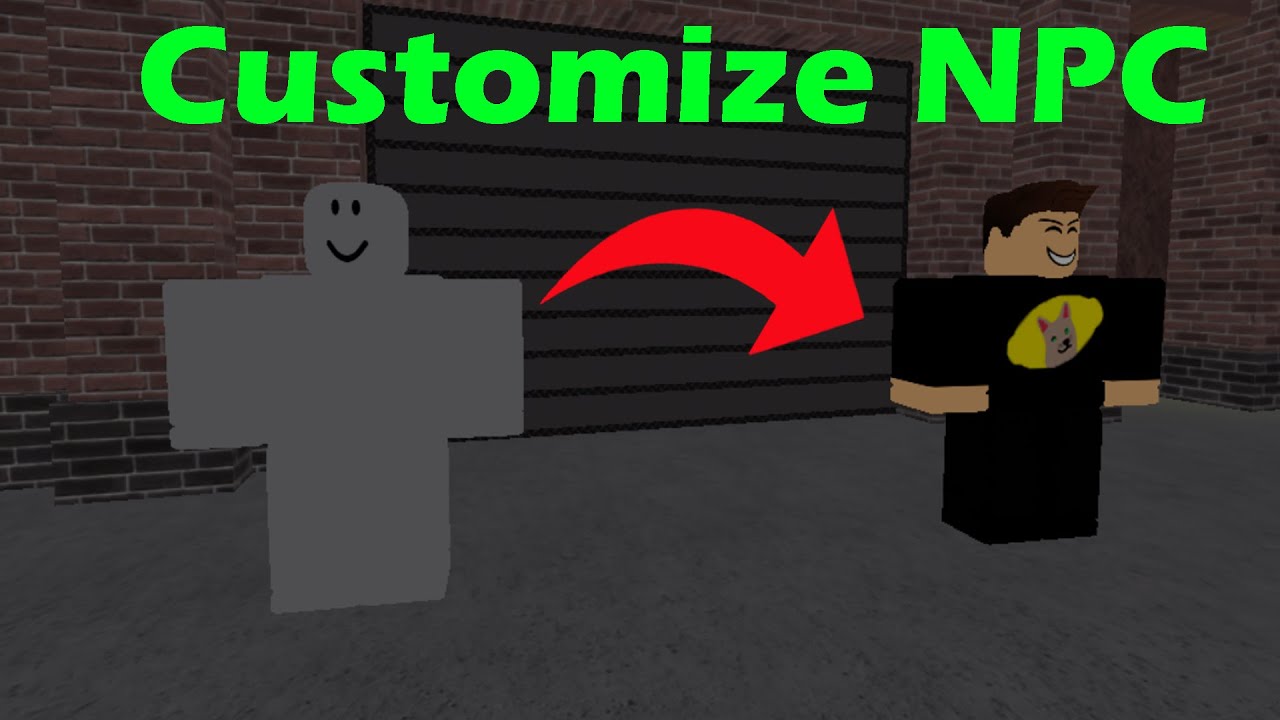
Roblox Studio How To Make A NPC Pathfinding System YouTube . NPC Move To FULL TUTORIAL Roblox Studio YouTube . How To Make An NPC Play An Animation Roblox Studio YouTube . ROBLOX Studio How To Customize An NPC YouTube . ROBLOX STUDIO How To Make A Following NPC YouTube


How To Make An NPC Dance In Roblox Studio Roblox Scripting Tutorial . How To Make NPC S Talk Roblox Studio 2023 Tutorial YouTube . How To Make An Advanced NPC System In Roblox Studio YouTube . How To Make A Rig NPC Talk In Roblox Studio YouTube . Roblox Studio How To Make A NPC Of YourSelf YouTube


How To Animate NPCs In Roblox Studio Complete Beginner Guide Lucid Origin A Detailed Of A Computer Screen Disp 0 . How To Make Animated NPC In Roblox Studio Part 1 YouTube Hqdefault . How To Add ANIMATIONS To A NPC Roblox Studio Tutorial YouTube . How To Make Animated NPC In Roblox Studio Part 2 YouTube Hqdefault . How To Make An NPC System In Roblox Studio YouTube


How To Make An Enemy NPC AI In Roblox Updated Roblox Studio Hqdefault . How To Make A Walking NPC In Roblox Studio YouTube . Roblox Studio NPC Dialogue Tutorial How To Make NPCs Talk In Roblox . How To Make An Enemy NPC In Roblox Studio YouTube . How To Make An NPC Dialogue System In Roblox Studio YouTube


How To IMPLEMENT AI Into NPCs In Roblox Studio YouTube . How To Make Talking NPCS In Roblox Studio Tutorial YouTube . How To Do A Talking Npc In Roblox Studio YouTube . How To Make A Walking NPC In Roblox Studio Simple YouTube . How To Make An NPC Play An Animation Roblox Studio YouTube